
Home/OpinionArticle
Opinion

The BRICS currency question New Delhi is deliberately not asking

A common BRICS currency has no agreement behind it and carries a 100% tariff threat from Washington. India’s summit agenda routes around it entirely, choosing settlement plumbing over monetary confrontation — and the choice is the most revealing thing about this summit.

BRIC Team
By BRIC Team · BRIC.TV
Published Sep 11, 2026 · 2 min read · 197 views
The BRICS currency question New Delhi is deliberately not asking

Key Takeaways

  • •There is no agreement among BRICS members on a common currency
  • •Trump has threatened 100% tariffs over anti-dollar initiatives
  • •India’s agenda favours local-currency settlement and payment links over a shared unit
  • •BRICS foreign ministers failed to reach consensus on West Asia in May 2026

The most consequential item at the New Delhi BRICS summit is one that is not on the agenda. There is no BRICS currency proposal this week, no shared unit of account, no monetary union working group. That absence is a decision, and it is worth reading properly.

A common currency has never had agreement behind it. It has had enthusiasm from some capitals, silence from others, and no member willing to surrender monetary policy to a bloc containing both a sanctioned economy and a Gulf state pegged to the dollar. The economics were always implausible. What changed is that the rhetoric acquired a price tag: US President Donald Trump has threatened 100% tariffs on countries pursuing anti-dollar initiatives.

Settlement, not substitution

So India built its chairship agenda around the part that works. Local-currency settlement. Faster cross-border payments. Links between national instant-payment systems and, eventually, member central bank digital currencies. Narendra Modi told the Business Forum that UPI now carries about half the world’s real-time digital payments — offered as infrastructure, not as ideology.

The distinction is real, not cosmetic. Settling India-UAE oil trade in rupees and dirhams removes a conversion, a spread and a day of settlement lag. It does not challenge the dollar’s role as a reserve asset, because nobody is asking central banks to hold rupees. Reserve status is won by depth, convertibility and the willingness to run deficits, and no BRICS member is volunteering for that job.

What the summit does expose is how much easier plumbing is than politics. In May, BRICS foreign ministers could not reach a joint position on West Asia. The bloc now contains Iran, Saudi Arabia and the UAE simultaneously — a membership that makes consensus on regional security arithmetically unlikely. India, importing more than 85% of its crude, has a direct interest in Hormuz staying open and no mechanism inside BRICS to help keep it that way.

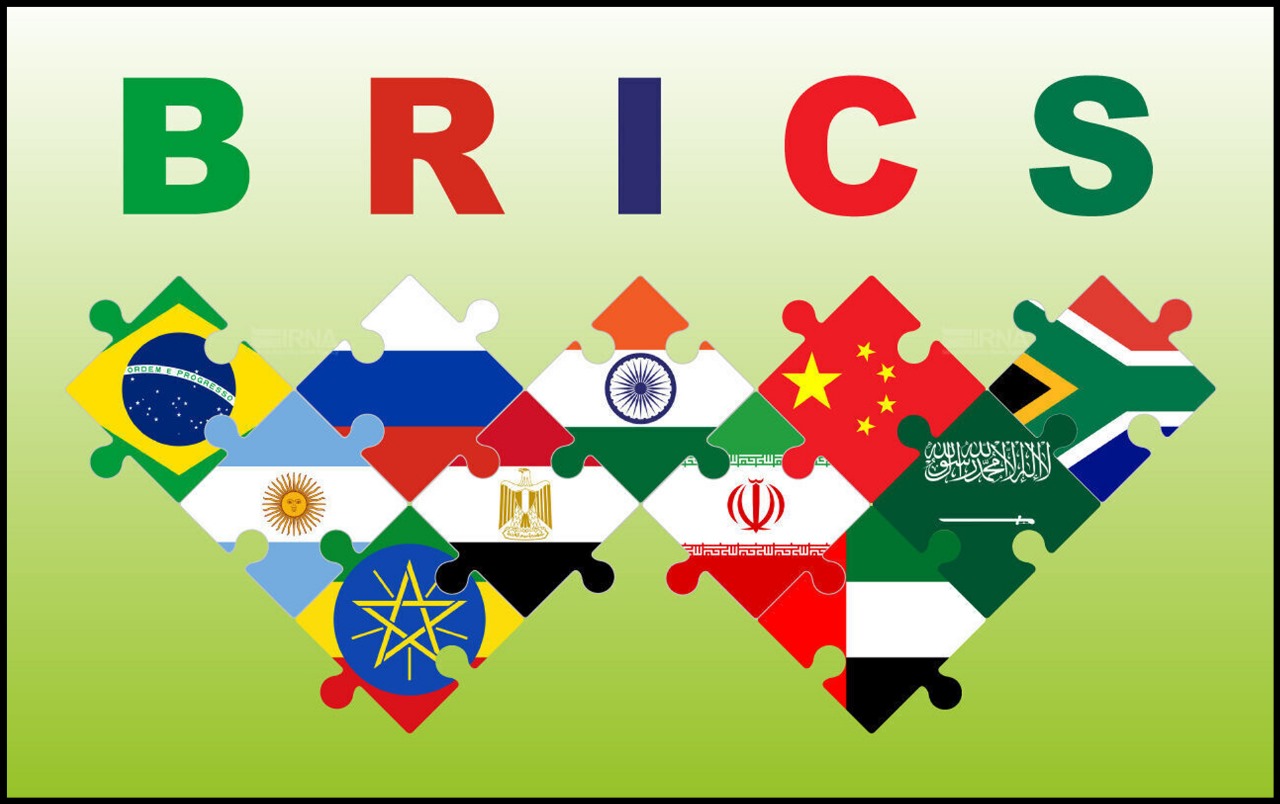
That is the honest shape of this grouping at twenty. Eleven members holding close to half the world’s population and around 40% of its GDP, capable of agreeing on payment rails, development finance and a barriers audit, and structurally incapable of agreeing on a war. Expansion bought representation and spent cohesion.

Read Modi’s request for a report on the top ten intra-BRICS trade barriers in that light. It is not a modest ask because India lacks ambition. It is modest because it is the largest thing eleven governments with this little in common can actually deliver — and delivering something small is how a bloc that has been accused of being a photo opportunity stops being one.

A New Delhi Declaration is expected before the summit closes. Its value will lie in what it commits members to build, not in what it declares about the dollar.

#BRICS#BRICS Summit 2026#New Delhi#India#OPINION

Related Articles

India's Startup Ecosystem Eyes Regulatory Reforms to Boost Growth

India's Startup Ecosystem Eyes Regulatory Reforms to Boost Growth

India's startup ecosystem, with over 200,000 DPIIT-recognized startups and 100 unicorns, faces regulatory challenges. Addressing these frictions is crucial for attracting global capital and fostering enduring enterprises.

James Whiteson

Oct 5, 2026•11 views
McKinsey's Gautam Kumra shares Asian owner-CEOs' leadership success strategies

McKinsey's Gautam Kumra shares Asian owner-CEOs' leadership success strategies

Gautam Kumra from McKinsey & Co. delved into the traits of Asia's top owner-CEOs, noting their skill at balancing long-term vision with short-term execution. While they excel in value creation, they face hurdles in leadership transitions and staying market-relevant.

Daniel Brown

Oct 3, 2026•39 views
Xi and Trump meet at Washington summit amid trade truce extension

Xi and Trump meet at Washington summit amid trade truce extension

U.S. President Donald Trump and Chinese President Xi Jinping met in Washington, marking their second summit this year with limited breakthroughs. A key development was the extension of the U.S.-China trade truce, overshadowing the largely ceremonial nature of the meeting.

Ramesh Gupta

Oct 1, 2026•69 views
West Bengal holds bypolls in Nandigram, Rejinagar for two Assembly seats

West Bengal holds bypolls in Nandigram, Rejinagar for two Assembly seats

Congress nominee Milan Pradhan was arrested for a 19-year-old case hours after filing his papers for the Nandigram bypoll. This has raised concerns about fairness, with Rahul Gandhi condemning it as "political revenge."

Rahul Sharma

Sep 27, 2026•59 views
Supreme Court conservatives' role in recent voting decisions

Supreme Court conservatives' role in recent voting decisions

Four of the six conservative U.S. Supreme Court justices helped block a Trump-backed mail-in ballot plan, highlighting concerns about electoral integrity. However, past rulings on gerrymandering show potential for partisan influence, raising concerns about future voting rights decisions.

Daniel Brown

Sep 18, 2026•139 views
TiE members highlight India's deeptech growth and strategic capital mobilization

TiE members highlight India's deeptech growth and strategic capital mobilization

India's deeptech sector is gaining momentum with increased investments and strategic capital mobilization, supported by trade agreements and a projected $1.3 trillion domestic manufacturing market by 2030.

Daniel Brown

Sep 14, 2026•198 views